Amazon Advertising
Amazon Accelerate and unBoxed 2026: the 20 updates that change how you run your account
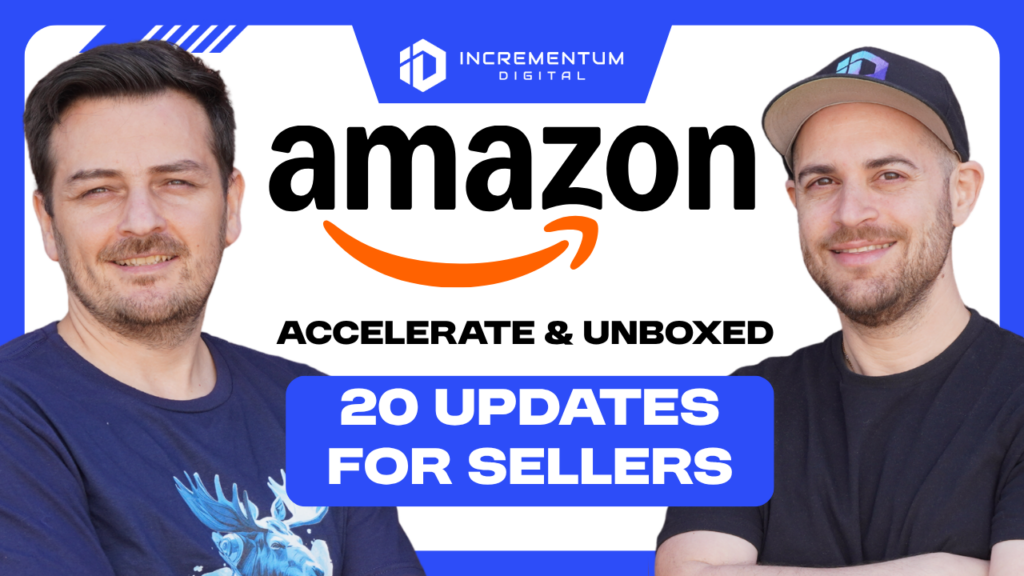
Amazon ran two conferences nine days apart. Amazon Accelerate 2026 updates came out of Seattle, where Amazon hosted September 22 to 24 and nearly 4,000 selling partners. Amazon unBoxed followed September 28 to 30 at the Moscone Center in San Francisco and rebuilt the advertising stack around one platform.
Learn How to Make Listings That Convert in 2025!
Read our step-by-step guide on how to optimize your listings using Rufus AI insights. Sign up for our newsletter and get your copy for free!
Show me howThe combined announcement list runs long, and Mansour Norouzi’s running index of every announcement from both events covers all of it. This post is narrower on purpose: these are the 20 that change your work, selected by us, sorted by whether you can act on them now. Several are not available yet and a few were announced months before either conference, both marked in the table below. Amazon publishes no count of its own announcements, so treat any number you see elsewhere, including ours, as editorial.
At a glance: the 20 Amazon Accelerate and unBoxed 2026 updates
| Update | What it is | Status | Who it affects |
|---|---|---|---|
| Seller Assistant workflows | Custom automations that run continuously and respond to conditions even when the seller is not logged in to Seller Central | Beta, US stores | All sellers |
| Seller Assistant plugin for Amazon Quick and Claude | Exposes listing contributions, performance metrics, inventory levels and sales analytics to an outside AI assistant | Beta, US stores | Sellers who work outside Seller Central |
| Canvas experience in Seller Assistant | A dynamic visual workspace that turns a question into tables and charts | Live since March 3, 2026, US and UK, no additional cost | All sellers |
| Listing Protection | In most cases a listing stays active while Amazon reviews a policy decision | All Account Health Assurance sellers in the U.S. by year-end, worldwide in 2027 | Account Health Assurance sellers |
| Seller Challenge | Request reviews of eligible listing-level policy decisions three times every 180 days, with decisions targeted within 48 hours | Live, after standard appeals | Account Health Assurance sellers |
| Multichannel selling tools | Connect eBay, Shopify, TikTok and Walmart accounts to Seller Central, import and link off-Amazon listings, and fulfill across channels | Rolling out gradually to U.S. sellers over the coming months, no additional cost | Sellers active on more than one marketplace |
| Global Warehousing & Distribution | Amazon-operated storage upstream of FBA, with storage costs up to 45% lower than AWD in the U.S. | U.S. today, seven more countries by year-end | Importing brands |
| Single-submission compliance testing | One test submission covering multiple countries, with savings of up to 60% on compliance costs | Starting with toys | Brands in regulated categories |
| Amazon Business Deals | B2B-specific deals running 1 hour to 30 days, minimum 10% off, no additional fees | Live in 10 markets | Sellers with B2B volume |
| Amazon lending expansion | Lending opens to every seller, with SBA-backed loans up to $5M | By year-end | All sellers |
| Amazon Ads Agent | The unified buying experience that brings together what was formerly the DSP and the Ads Console | Live as a rename, existing campaigns continue without disruption | All advertisers |
| Conversational experience in Amazon Ads Agent | Natural-language campaign building and analysis inside Ads Agent | Expanded closed beta, access through your Amazon Ads account executive | Advertisers with an account executive |
| DVA+ | Display, video and audio bought under one objective and one budget, with the DSP advanced settings retained | Extended closed beta in the U.S., open beta expected late October 2026, general availability targeted Q1 2027 | Programmatic advertisers |
| Full-Funnel Campaigns | Amazon builds and runs a campaign set across sponsored ads and DSP from a single goal | Now available to all advertisers in the United States | Advertisers without in-house management |
| Review Requests | A paid campaign type that asks recent purchasers for a review | Open beta in the United States in late October 2026 | Products with fewer than 1,000 total ratings and reviews |
| Branded Conversations | Brands supply context that Amazon uses to shape sponsored answers inside Alexa for Shopping | Launches January 2027 in the United States | Brand-registered advertisers |
| Sponsored Services | Local service ads on product detail, order confirmation and package tracking pages, with Yelp as the anchor partner | Available now for Yelp advertisers in eligible U.S. home and auto services categories | Home and auto service providers |
| Ads Data Manager for sponsored ads | Connect first-party audience data to sponsored ads targeting, with eight new connectors including Amazon S3 and Adobe Experience Platform | Available now to all advertisers, globally | Advertisers with a customer list |
| AMC SQL Generator expert tool | Generates Amazon Marketing Cloud SQL on the Amazon Ads MCP Server | Closed beta, U.S. only, free during beta, general availability early 2027 | AMC users |
| Natural-language reporting | Roughly 1,000 advertising metrics queried in plain language | Announced at unBoxed 2026 | All advertisers |
What changed in Seller Central at Accelerate 2026?
Seller Central is being rebuilt around Seller Assistant, and the change that matters is that Seller Assistant now runs when you are not watching it. The agentic version launched at Accelerate 2025. Accelerate 2026 added persistent memory, scheduled workflows, and a plugin that puts Seller Central data inside outside AI assistants.
Can Seller Assistant take actions on its own?
Yes, if you let it. Amazon’s recap quotes Chris Jones, Director of Seller Assistant, saying sellers “act on its recommendations about 90 percent of the time,” and that sellers choose whether Seller Assistant surfaces insights, drafts actions, or acts on its own. Joy Chang, Director of Support Experience, describes the same design from the control side: the seller defines the job and sets the guardrails, with nothing happening without approval and every action logged.
The approval gate is the detail that makes the acting mode usable: an assistant that drafts a title change and waits is a time saving with a reversible failure mode. One inconsistency to note: Amazon’s Accelerate recap lists three modes, while the plugin announcement describes a choice between surfacing recommendations and taking action.
What are Seller Assistant workflows?
Seller Assistant workflows are, in Amazon’s wording, “custom automations that run continuously, monitoring conditions, interpreting changes, and responding dynamically, even when the seller isn’t logged in to Seller Central.” Amazon’s name for the feature is workflows, not Automations, which is worth getting right because the two terms are being used interchangeably in coverage.
The prebuilt templates cover account health, order summaries, pricing trends, and product expansion opportunities. Returns is not among them. Every action is logged with a complete audit trail. Workflows are in beta for sellers in Amazon’s U.S. stores.
What does the canvas experience in Seller Assistant do?
The canvas experience turns a Seller Assistant question into a dynamic visual workspace of tables and charts rather than a block of text. It is worth being clear about the date: the canvas experience was published on March 3, 2026, six months before Accelerate, and is available to all sellers selling in the U.S. and U.K. at no additional cost. Several recaps list it as an Accelerate 2026 launch. If you have not opened it yet, it has been in your account since spring.
Is the old Seller Central layout going away?
Amazon has not published a sunset date for the previous Seller Central layout. We also could not find Amazon publishing a layout toggle, a list of tool consolidations, or new navigation paths for specific reports. Claims about particular tools merging are circulating widely and none are documented on any Amazon page we checked.
What Amazon does say in the Accelerate recap is that it eliminated 37 million reasons for sellers to contact support. Plan any migration work against your own screenshots of the current navigation, because Amazon has not published a map.
Can you use Seller Central through Claude or Amazon Quick?
The Seller Assistant plugin is available in beta for sellers in Amazon’s U.S. stores, and it is built on Amazon Bedrock using Claude models. The plugin exposes listing contributions, real-time performance metrics, inventory levels, and sales analytics. Advertising data is not in that list, so campaign management stays inside the ads stack. Amazon is including a free 12-month Amazon Quick Plus subscription through December 31, 2026.
GeekWire’s read is that Amazon is ceding the interface layer, letting sellers manage inventory, prices and listings without opening Seller Central at all. The same piece notes that 1.3 million sellers have used Amazon’s AI listing tools.
What is Amazon Ads Agent, and is the Ads Console gone?
Amazon Ads Agent is the new name for the unified advertising platform, and it is “the unified buying experience that brings together what was formerly the DSP and Ads Console.” The Ads Console is not gone in the sense of anything breaking. Amazon states that “Amazon DSP has evolved into Amazon Ads Agent,” that existing campaigns continue to run without disruption, and that no action is required on your part.
Two things are worth separating. The rename and consolidation have happened. The agent, in the sense of a conversational system that plans and executes campaigns, has not shipped to most advertisers. The programmatic capabilities previously in Amazon DSP are all available within DVA+ using advanced settings, and sponsored ads remain cost-per-click with no minimum spend. The naming change does not alter whether DSP belongs in your mix, and our guide to Amazon DSP for mid-market brands still applies.
Has the conversational Ads Agent actually shipped?
The conversational experience in Amazon Ads Agent is available in closed beta to eligible self-service and managed-service advertisers, and access runs through your Amazon Ads account executive. Amazon describes it as an expanded closed beta, which is a meaningful distinction from an open beta you can opt into. If you do not have an account executive, there is no self-serve path in today.
What is DVA+ and who should use it?
DVA+ buys display, video and audio under one objective and one budget instead of three separate campaign builds. It is currently available in extended closed beta in the United States, with open beta expected to begin late October 2026, international expansion planned through Q4 2026, and general availability across 35 markets targeted for Q1 2027. Billing is invoice-only during the closed beta, with credit card support arriving in Q1 2027.
The DSP advanced settings survive in full: manual targeting, lookalikes, retargeting, suppression, manual bid strategies, frequency caps, deal activation, dynamic creative optimization, and budget flighting. A team already running disciplined programmatic does not lose its levers.
A caution on expectations. Display, video and audio buy awareness, and awareness compounds through repetition over weeks. Sponsored Products behavior, where a click and a purchase happen in the same session, is not what a video impression produces. A brand running DVA+ against a bottom-of-funnel ROAS target will read the first month as a failure when the campaign is doing the job it was built for.
What smaller changes landed in the ads console?
Two console changes are documented in Amazon’s recap, both quoted to Muthu Muthukrishnan, VP of Sponsored Products and Brands. Campaign creation now runs a readiness check on a listing first, so you find out about a thin listing before you spend against it. And new campaigns using auto-optimization “saw a first sale 40 percent faster.”
What is Amazon Review Requests and when does it launch?
Review Requests is a paid campaign type that asks recent purchasers to leave a review, and it launches in open beta in the United States in late October 2026. It is built inside Amazon Ads Agent and the Amazon Ads Unified API, using the same bidding and budget controls as your other Amazon Ads campaigns. Registered sellers and vendors in good standing with no active policy violations are eligible.
The eligibility cap is stricter than most coverage says. Products are eligible when they have fewer than 1,000 total ratings and reviews combined, and Review Requests pause automatically once a product reaches 1,000. That is ratings plus reviews, not reviews alone, which puts much of an established catalog out of scope on day one.
Amazon’s closed beta figure is three times as many ratings and reviews per week, footnoted to internal Amazon data from a U.S. closed beta running June 3 to 21, 2026. Amazon also cites BrightLocal’s Local Consumer Review Survey finding that 97% of shoppers rely on reviews.
Here is the part worth sitting with: the paywall and the 1,000-review cap are the right design. A free, uncapped version would attach a review prompt to every household repurchase, and review quality would fall as volume rose. The cap points the feature at products without social proof, making it a catch-up lever for a newer product competing against a legacy listing that can no longer run it. If you are planning a launch, this changes the sequencing in our guide to launching a new product on Amazon, and it rewards getting the listing right first, which our Amazon listing optimization guide covers in full.
What Amazon has not published: a pricing model. Amazon has confirmed bidding and budget controls but no cost structure for Review Requests. Several recaps state it runs on cost-per-click, which we could not confirm against any Amazon page, so do not budget against a CPC assumption. Amazon has also published nothing about Review Requests replacing the request-a-review button in Manage Orders.
Is Full-Funnel Campaigns worth running?
Full-Funnel Campaigns is Amazon’s product that builds and runs a campaign set across sponsored ads and DSP from a single stated goal, and it is now available to all advertisers in the United States. Amazon’s name for it is Full-Funnel Campaigns, capitalized and hyphenated, which is worth matching because most coverage calls it “full funnel marketing.”
Amazon’s beta results are a 67% higher long-term return on ad spend and a 29% lower cost to acquire new-to-brand customers. Brenda Quintana of Canine Naturals is quoted in Amazon’s unBoxed recap saying “41% of sales from Full-Funnel Campaigns were new to our brand.” That is a brand’s statement about its own share of sales, not an Amazon platform metric.
On budget: no Amazon page we could reach publishes a daily minimum. MediaPost reports a minimum daily budget of $100, which is the only published figure we found anywhere. Treat it as MediaPost’s reporting rather than an Amazon spec.
What does Full-Funnel Campaigns actually build?
The following is our own observation, not an Amazon-published spec. A client came to us with beta access already in place, during a window when Amazon was still exposing the underlying campaigns through the API. What we saw it launch: automatic targeting plus exact, phrase and broad Sponsored Products, Sponsored Brands video and headline, Sponsored Display, and DSP. The structure had four problems we would not have built in:
- Ten to twelve ad groups inside a single campaign, which makes budget behavior hard to attribute to any one targeting decision.
- Exact and phrase match in the same campaign, so the two match types compete for the same budget without a bid separation between them.
- Branded and unbranded terms together, which inflates reported ROAS on the campaign as a whole because branded search converts regardless of the ad.
- No negation, so a search term that spends without converting keeps spending.
Why does Full-Funnel Campaigns report strong ROAS while total sales stay flat?
Here is the part most readers will not have considered: with DSP in the mix, Full-Funnel Campaigns reports a strong ROAS while incremental sales stay flat. DSP retargets shoppers who were already going to buy, those conversions get attributed to the campaign, and the campaign-level number looks excellent while total sales do not move in proportion. A branded-heavy catalog makes this worse, because branded search is already converting and the campaign absorbs credit for it.
This is why campaign-level ROAS is the wrong number to judge Full-Funnel Campaigns on. Total advertising cost of sale against total sales shows whether advertising spend is buying growth, and our posts on TACoS vs ACoS and how to improve TACoS walk through the arithmetic.
Who should run Full-Funnel Campaigns?
Full-Funnel Campaigns is a reasonable test for a seller with no in-house advertising capacity, no agency, and a willingness to treat the first 60 days as an experiment. It gets a complete campaign set live in an afternoon.
For an account with someone managing it, the same budget split across campaigns you can segment, negate and bid on separately gives you levers Full-Funnel Campaigns does not expose, and the measurement stays legible. Our guides to the structural decisions that break margin when scaling Amazon PPC and the signs your Amazon PPC is bleeding money cover what those levers do.
Where can Amazon ads show up now?
Do ads appear inside Amazon’s AI shopping conversations?
Yes. Sponsored Products and Sponsored Brands prompts appear inside Amazon’s AI shopping conversations, and existing sponsored ads campaigns are automatically eligible to be optimized as a prompt. The date matters here: these prompts launched at unBoxed 2025, not 2026, so they have been running in your account for roughly a year whether or not you noticed.
Amazon reports that shoppers who click a prompt convert to a sale 48% more often and spend 21% more on average. Prompt placement runs off the campaigns you already have, so the optimization work is listing and targeting work, which our guide to optimizing Amazon ads for AI shopping conversations covers.
What are Branded Conversations?
Branded Conversations lets a brand supply context about its products and how they work together, which Amazon combines with its own data to decide what to surface inside Alexa for Shopping. Branded Conversations will launch in January 2027 in the United States, clearly marked as Sponsored. Amazon reports that nearly 20% of shoppers who interact with a Sponsored Brands prompt continue the conversation about that brand. The cross-sell angle is the interesting part: a conversation is where “you will also need this” actually fits.
On the guardrails, AdExchanger put the obvious question to Amazon’s Amjad Jbara and got a flat no: brands cannot make favorable reviews more visible in AI results. Advertisers supply conversational briefs, can edit them mid-campaign, and get prompt-level clicks, conversions and ROAS.
There is a real counterweight here that no Amazon page addresses. An April 2026 Ipsos survey, reported by eMarketer, found that over half of US adults would trust AI recommendations less if they knew advertisers influenced them, against 14% who would trust them more. Branded Conversations carry a disclosure, which is the honest design choice and also the one that triggers that reaction. Budget for a format whose effectiveness may compress as disclosure becomes familiar, and read it alongside our Alexa Plus and external traffic playbook.
Is Amazon selling local services ads now?
Yes, and this one is live. Sponsored Services is available now for Yelp advertisers within eligible home and auto services categories in the U.S., with Yelp as the anchor partner supplying provider inventory and more than 300 million reviews. Ads appear on product detail, order confirmation and package tracking pages, and the shopper clicks Call or Quote rather than Add to Cart. Covered categories include plumbers, electricians, landscapers, roofers and movers.
For a product brand this is not a channel to buy. It is a signal about direction: a shopper who buys a faucet is now a qualified lead for a plumber, and the package tracking page is now advertising inventory.
Should you connect your own customer data to Amazon?
Ads Data Manager connects first-party data such as a customer email list to Amazon’s targeting, so you can reach or bid differently on those customers when they search on Amazon. The expansion to sponsored ads is available now to all advertisers, globally. Amazon reports 30% incremental ROAS for advertisers who use it, footnoted to internal data across 250,000-plus campaigns and $5.6B in combined media spend from 2024 to 2025. Eight new connectors shipped, including Amazon S3, Adobe Experience Platform, LiveRamp and Segment.
The honest version of the trade: uploading a customer list hands Amazon first-party data it does not otherwise have, and that decision belongs to the brand, not to whoever happens to have CSV export access. Amazon’s nearest published commitment sits in the footnote to its multichannel selling tools announcement, where Amazon states that the seller chooses what to share, can disconnect at any time, and that the data is “not shared with other sellers or used to inform Amazon’s retail business decisions.” That commitment is written about the multichannel tools specifically. Decide your position deliberately and make sure everyone with account access knows it. Teams already working in Amazon Marketing Cloud have usually had this conversation already.
What changed in Amazon logistics and multi-channel selling?
What is Global Warehousing and Distribution?
Global Warehousing & Distribution is Amazon-operated storage that sits upstream of FBA, taking inventory from the factory across the ocean into local storage, then into FBA or out to other channels. Amazon states storage costs up to 45% lower than AWD in the U.S. and FBA replenishment up to five days faster. Global Warehousing & Distribution is live in the U.S. with seven more countries by year-end: the UK, Japan, Germany, France, Italy, Spain and Canada. On the origin side, Amazon opened the service in Shenzhen first, with Shanghai and Ningbo added. A separate configuration pairing Shenzhen with Amazon Global Logistics is reported to move inventory up to seven days faster into U.S. fulfillment centers. The five-day and seven-day figures describe different setups, so do not combine them.
Two numbers explain why Amazon built this. Sellers active in more than one country earn 70% more revenue on average, and only 30% of Amazon’s selling partners list in more than one country. Amazon also announced single-submission compliance testing starting with toys, with savings of up to 60% on compliance costs. Separately, Amazon Supply Chain Services, bundling Freight, Distribution and Fulfillment, and Parcel Shipping, launched on May 4, 2026, not at Accelerate.
What do Amazon’s multichannel selling tools actually do?
Amazon’s multichannel selling tools let you connect eBay, Shopify, TikTok and Walmart accounts inside Seller Central, import and link off-Amazon listings, view multichannel sales and orders in one place, and fulfill across channels. They are rolling out gradually to sellers in the U.S. store over the coming months, at no additional cost. Amazon’s stated rationale: more than 95% of independent sellers sell across multiple channels.
Marketplace Pulse supplies the counter-data, and it is the more useful number for planning. The 2026 Seller Index found that 71% of Amazon-primary sellers active on another marketplace still earn at least 75% of their marketplace revenue from Amazon. Multi-channel is common, meaningful diversification is not, and the other channels still orbit Amazon even as Seller Central makes them easier to run. If you are building volume elsewhere, our guides to TikTok Shop advertising for Amazon sellers and Walmart advertising for Amazon sellers cover what changes once you do.
Can you move ad budget across platforms based on results?
No. Nothing announced at Accelerate or unBoxed 2026 moves advertising budget across Amazon, Walmart, TikTok Shop and your own site based on measured results. The multichannel tools unify order and fulfillment views, not ad spend decisions. Claims that a current tool allocates budget across platforms on performance rest on cross-platform attribution assumptions nobody can show you the working for.
What about product-level forecasting and the 90-day launch plan?
Product-level sales forecasting and a 90-day launch plan were discussed at Accelerate 2026, and Amazon has not published a specification for either. The practical move is to check whether these appear in your own account, then compare the output against the forecast you already build. Amazon’s forecasting is a reasonable baseline and a poor substitute for a forecast that knows your promotional calendar.
Which Amazon Accelerate 2026 updates should you act on first?
- Move your team into the new Seller Central layout now. Amazon has published no sunset date, so the migration arrives on Amazon’s schedule rather than yours. Document your navigation paths while you still have both layouts to compare.
- Pull every product under 1,000 total ratings and reviews. That list is your Review Requests queue for the late-October 2026 open beta. Build it now rather than in launch week.
- If you are running Full-Funnel Campaigns, judge it on incrementality. Compare total sales and total advertising cost of sale across the period, not the campaign-level return the console shows you.
- Leave the conversational Ads Agent alone until it ships. Access runs through an account executive and the beta is closed. There is no work to do here this quarter.
- Decide your first-party data position before someone uploads a list. Ads Data Manager is live globally and takes minutes to connect.
If you are earlier than that, our first 90 days on Amazon playbook sequences the foundational work that has to be in place before any of the above pays off.
Amazon Accelerate and unBoxed 2026 FAQ
When does Amazon Review Requests launch?
Amazon Review Requests launches in open beta in the United States in late October 2026, per Amazon’s dedicated Review Requests announcement. Amazon’s Branded Conversations post gives November 2026 instead, and the two have not been reconciled. Plan against late October.
How many reviews before Review Requests stops running?
Review Requests pauses automatically for a product once it reaches 1,000 total ratings and reviews. Eligibility is based on ratings plus reviews combined, not reviews alone, so a product with 700 ratings and 400 reviews is already past the threshold.
Is the Amazon Ads Console gone?
The Amazon Ads Console and Amazon DSP have been consolidated under the name Amazon Ads Agent. Existing campaigns continue to run without disruption and Amazon states no action is required. Sponsored ads remain cost-per-click with no minimum spend.
Is Full-Funnel Campaigns worth it?
Full-Funnel Campaigns suits a seller with no in-house advertising capacity who wants a campaign set running quickly and will treat the first 60 days as a test. An account with active management will get more from the same budget split across campaigns that can be segmented, negated and bid on separately. Judge either setup on total advertising cost of sale, because DSP in the mix inflates the campaign-level ROAS.
Can I manage Amazon Seller Central through Claude?
The Seller Assistant plugin is in beta for sellers in Amazon’s U.S. stores and works with Claude and Amazon Quick. It exposes listing contributions, real-time performance metrics, inventory levels and sales analytics. Advertising data is not included.
Is the old Seller Central design going away?
Amazon has not published a sunset date for the previous Seller Central layout, a layout toggle, or a map of which tools have moved where. The redesign is proceeding and the timeline is not documented.
What to do next
Check this list against your own account. Two of the updates above, Review Requests eligibility and Full-Funnel Campaigns measurement, depend on numbers only your account can tell you.
If you want someone else to look first, we run a free Amazon ads audit: a real review of your account, built on your own data, delivered as a hosted link rather than a generic report, with no commitment. The thing we look at hardest is wasted spend measured properly, which means a clicks-to-order threshold per product rather than a list of products that spent with no sales. Our walkthrough of what an Amazon PPC audit actually finds shows the format with three real brand examples.
Request your free Amazon ads audit
Our recaps of Amazon unBoxed 2025 and Amazon Accelerate 2025 show which announcements from last year actually shipped.
Incrementum Digital is a full-service Amazon agency managing advertising, operations and growth strategy for brands from seven to nine figures in annual Amazon revenue. We are an Amazon Ads Advanced Partner.
Watch the 30-minute breakdown by our CEO and Founder, Liran Hirschkorn, together with Partner and Director of Advertising, Mansour Norouzi:

LET’S DISCOVER WHAT’S POSSIBLE FOR YOUR BRAND
We’re here to listen and uncover opportunities tailored to your unique goals.
Fill out the form to get started, and you’ll walk away with real insights and actionable recommendations—whether we work together or not.
- HANDS-ON LEADERSHIP
- AWARD-WINNING PARTNERSHIPS
- CUSTOM-BUILT SOLUTIONS