eCommerce News
AI-powered products on Amazon: what the label actually does to conversion
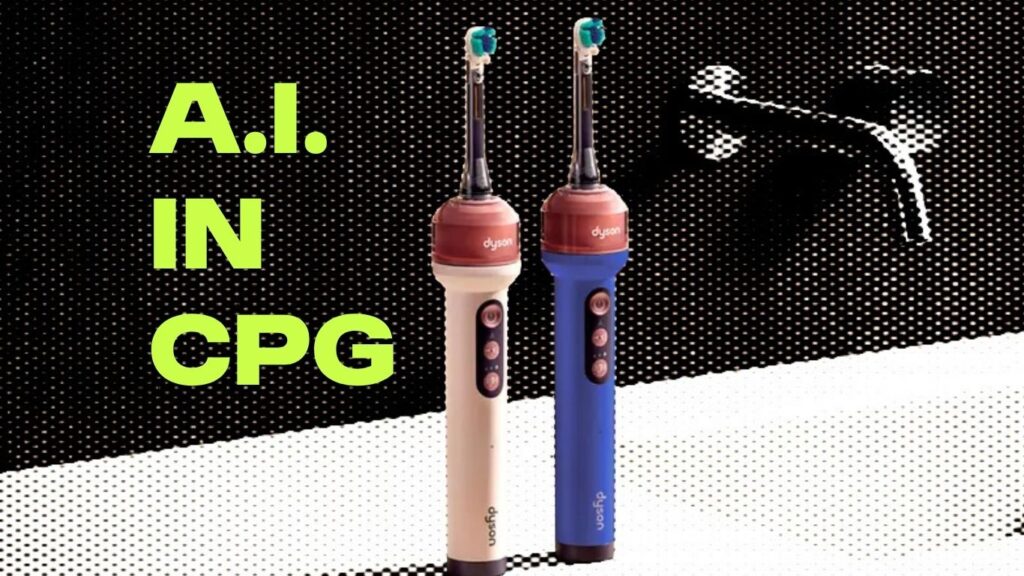
Calling a product AI-powered does not command a premium on Amazon. The same claim currently runs from about $39 to $499 within a single set of search results, so the label alone tells a shopper nothing about price or quality. What separates the products that sell is a named mechanism a shopper can picture and a launch plan that builds velocity before reviews exist.
Learn How to Make Listings That Convert in 2025!
Read our step-by-step guide on how to optimize your listings using Rufus AI insights. Sign up for our newsletter and get your copy for free!
Show me howDyson launched the CameraJet on September 1, 2026: a $499 toothbrush with a built-in camera and a machine learning model that finds gaps between teeth and fires a precision jet of mouthrinse at them. A first-party pull of that category’s search results shows exactly what the claim does and does not buy.
What does “AI-powered” actually mean on a listing today?
On Amazon, “AI-powered” covers at least three different things, and the search results never distinguish between them. The first is a sensor paired with a model that changes what the product physically does, the way Dyson’s camera finds a gap and triggers a jet in real time. The second is an app that scores behavior a device was already capturing, the way a zone-tracking toothbrush turns brushing data into a score. The third is a marketing word applied to a feature that would have shipped anyway, like a preset timer.
All three show up identically in a product title or bullet point. A shopper comparing a $40 brush and a $499 brush under the same search term has no listing-level signal for which kind of “AI” they are looking at, which is exactly the problem for a brand trying to charge more for the real kind.
Does calling it “AI” help or hurt sales?
The instinct to lead with “AI-powered” runs against the research. A 2024 Washington State University study tested identical product descriptions, including smart TVs, and varied only whether the term “artificial intelligence” appeared or was left out. Across all eight product and service categories tested, the version that named AI produced lower purchase intent, an effect the researchers traced to reduced emotional trust. The gap widened on higher-priced, higher-risk categories: expensive electronics, financial services, medical devices.
Awareness is not the barrier. Circana’s 2026 Connected Intelligence report found 86% of US adults are already aware that AI runs in their devices, and about 35% of them say they are still not interested in having it there.
Read together, the two findings point the same direction: naming the mechanism costs less trust than naming the technology. At a $39 price point, an unexplained “AI” badge is a cheap differentiator with little to lose. At $499, the same badge lands on exactly the category where the WSU study found the trust penalty is largest. Dyson’s own Amazon listing reads like it absorbed this: the first bullet leads with the camera and the flossing action, and the machine learning model appears in the second bullet under a branded name, Gap Optical Targeting, rather than as an “AI-powered” claim.
How much do AI-enabled products actually cost on Amazon?
A first-party pull of “ai toothbrush” returned roughly 200 results spanning about $39 to $500, all carrying some version of the same claim. Amazon’s own Overall Pick for the term was the $40 brush, not a premium one.
Volume concentrated at the bottom of that range. Entry-price brushes making no real AI claim, including the Overall Pick, moved an estimated tens of thousands of units a month between them, while the AI-forward premium brushes in the same result set estimated in the low hundreds. The table below rounds the comparison for the toothbrush category specifically:
| Product | Price | AI claim | Est. monthly units |
|---|---|---|---|
| Entry-price brush, Amazon Overall Pick for “ai toothbrush” | ~$40 | Marketing label, no app required | Tens of thousands |
| Feno Smartbrush | ~$300-$400 | App-scored brushing, personalized mouthpiece | Low hundreds |
| Dyson CameraJet | ~$500 | Camera + real-time gap-targeting model, branded Gap Optical Targeting | Pre-order, no sales history yet |
Rounded from a first-party Amazon search pull, zip 10001, early September 2026. Sales figures are third-party estimates from a single keyword on a single day and should be read as directional, not precise.
A control category makes the same point from the other direction. A search for “ai air purifier” returns a category that mostly avoids the word entirely. The major brands there sell “smart,” “auto mode” and “air quality monitor” instead, because sensor-driven purifiers have been standard for years and the AI label adds nothing left to differentiate. Where the underlying feature is already assumed, the label stops being a premium and becomes noise.
Three business models hiding under one AI label
“AI-powered” describes at least three different ways a brand makes money from the same claim, and the model chosen sets the margin structure, the review profile, and how much of the pitch survives if a subscription lapses.
Consumable lock-in. The sensor requires a refill only the brand sells. Dyson’s camera is built to work with a proprietary non-foaming, SLS-free toothpaste and a matching low-foaming rinse, both still unpriced in the US, with RFID-tracked brush heads planned alongside a subscription. Feno pairs its brush with its own foam toothpaste and a replaceable fitted mouthpiece.
The intelligence is the subscription. A camera-equipped litter box in the same broader “AI pet” space sells its waste-analysis feature on a free trial, after which the cloud AI that actually performs the analysis moves behind a paid annual plan. The hardware keeps working after the trial ends; the intelligence does not.
AI as a moat around a consumable you already sell. Purina’s Petivity monitor sits under an existing litter box at roughly $80 and locks in no proprietary hardware at all. Its job is not to sell the monitor. It is to keep the household buying Purina litter and food.
What should your brand actually ask about its own category?
Dyson’s camera did not just add a feature to a toothbrush. It moved flossing and rinsing out of a separate step in the routine and into the handle, which puts the CameraJet in competition with the floss aisle and the water-flosser aisle, not only the electric toothbrush next to it on the shelf.
The same move is running in other categories. A roughly $570 camera-equipped litter box reads waste and flags a possible health issue, work that used to start with a household noticing something was wrong and booking a vet visit. A $999 LED face mask runs a skin analysis close to one an esthetician would charge for separately. In each case, a sensor lets a product already in the home absorb a job that used to require a second purchase or a scheduled appointment.
Absorbing a job does not by itself create demand. The $999 mask holds a strong 4.8-star rating on roughly 140 ratings and still sits near the bottom of its category rank, so the mechanism working as advertised is not the same as the mechanism selling. Whether a sensor-driven feature lands depends on the category, the price elasticity of the buyer, and how visible the benefit is without it, and that answer changes by category rather than following a single rule.
How should AI features be described in Amazon bullet points?
The right description moves by category and price point, but a few considerations hold across most of them.
Name the mechanism, not the technology. A shopper cannot picture a model trained on 470,000 images; a shopper can picture a lens finding a gap and a jet firing into it. Put that visible mechanism where a shopper actually looks first, in image two rather than buried in a fourth paragraph of bullet text.
A branded technology name carries specificity that “AI-powered” does not, and it is defensible in a way a generic label is not. Where a trust objection is real and predictable, such as a camera operating in a bathroom, answer it directly in the listing content instead of leaving it for reviews to raise first; Dyson devotes an entire A+ content module to stating that no images are recorded or stored, on the device or in the cloud.
Shoppers still search “ai toothbrush” as a literal phrase, so the term carries real indexing value even where it carries a trust cost. Those are two separate decisions. The term can live in backend search terms or a supporting bullet, rather than the title, without giving up the traffic it earns.
How do you launch a premium AI-enabled product on Amazon with no reviews?
A premium launch starts with zero reviews and no sales history, which means there is nothing yet for Amazon’s ranking systems to read. The pre-order window is part of the launch itself, not a warm-up period before the real work starts.
The sales velocity a listing earns in its first weeks is what the algorithm learns from, and that velocity is what paid placement is buying at launch: the visibility that produces the early sales and reviews organic rank is later built on. A higher price paired with an unfamiliar mechanism also means a longer consideration cycle, so upper-funnel and video placements carry more weight than they would on a $40 item a shopper already understands.
On page one of “ai toothbrush” during the same pull, Dyson held none of the twelve sponsored slots on the term while competitors bought it. That reads as a pre-order-window decision rather than a mistake, since holding spend until the ship date is a defensible call for a listing with zero reviews to convert against. None of this launch math transfers unchanged to a $60 AI-labeled product, where the review gap closes fast and a different pace of spend applies.
Are AI health claims on consumer products a compliance risk?
Sensor-plus-model products are increasingly marketed as detecting a health condition rather than just performing a task, and the bar for substantiating a health claim is different from the bar for substantiating a performance claim. A brand adding a health-adjacent AI feature should treat that distinction as a question for counsel before it becomes bullet-point copy, not after. This is a compliance question specific to each product and claim, and it needs legal review before anything ships, not a general answer a blog post can responsibly give.
FAQ
Does saying “AI” in a product description hurt sales?
Research on identical product descriptions found that naming AI explicitly lowered purchase intent across every category tested, driven by reduced trust rather than by the feature itself. The effect was strongest on expensive or higher-risk products, and mildest on cheap, low-risk ones.
Do consumers trust AI features in products?
Most are aware AI is already in their devices, but a meaningful share, roughly a third in recent research, say they are still not interested in having it there. Trust and awareness are separate variables, and a listing that assumes awareness equals acceptance is making an unsupported leap.
What makes an AI product different from a smart product?
An AI product typically pairs a sensor with a model that changes behavior in real time, the way a camera-guided toothbrush decides where to jet rinse. A smart product more often automates or reports on something a device was already capable of, without the model actively changing the output moment to moment.
Can you run Amazon ads on a pre-order listing?
Yes, and a pre-order window is often the highest-leverage point to spend, since it is building the velocity and review base the algorithm will read once the product ships. Holding spend until ship date is also a legitimate call for a brand still finalizing packaging or claims.
Are AI health claims on consumer products a compliance risk?
They can be, because a claim about detecting or predicting a health condition faces a different substantiation bar than a plain performance claim. Any brand making that kind of claim should route the specific wording through counsel before it appears on a listing.
What’s the difference between “AI-powered” and “smart” on a listing?
On Amazon, the two labels are frequently used interchangeably as marketing language, even when the underlying mechanism is identical. Neither term is standardized, so the label itself tells a shopper less than a named, specific mechanism would.
What to do next
If your brand is weighing an AI or sensor-enabled SKU, the sequencing questions are the same ones any Amazon product launch has to answer, just with a longer consideration cycle and a smaller review base to lean on early. Getting the AI claim right in the bullets is one part of a broader listing optimization pass, and it helps to know how Amazon’s own AI reads a listing before you decide how to word it. Before locking a bullet around a phrase like “ai toothbrush,” a look at actual search query performance in your category will tell you whether shoppers use that exact language or something else.
If there is a premium or novel SKU in your lineup right now, it’s worth seeing what an Amazon PPC audit actually finds in accounts like it. A free Amazon audit shows what your own listing and ad program are actually doing at the moment shoppers are deciding whether to trust it.



LET’S DISCOVER WHAT’S POSSIBLE FOR YOUR BRAND
We’re here to listen and uncover opportunities tailored to your unique goals.
Fill out the form to get started, and you’ll walk away with real insights and actionable recommendations—whether we work together or not.
- HANDS-ON LEADERSHIP
- AWARD-WINNING PARTNERSHIPS
- CUSTOM-BUILT SOLUTIONS