Amazon Advertising
5 signs your Amazon PPC is bleeding money (and why it matters more in prep for Prime Day 2026)
Amazon CPCs have been climbing steadily — enough that Amazon launched its own self-service benchmarking tools in late 2025 so advertisers can track category-level cost trends directly in Ad Console. And during Prime Day 2025, Skai’s analysis showed click-through rates jumped 74% year-over-year, meaning more brands competing for attention than ever.
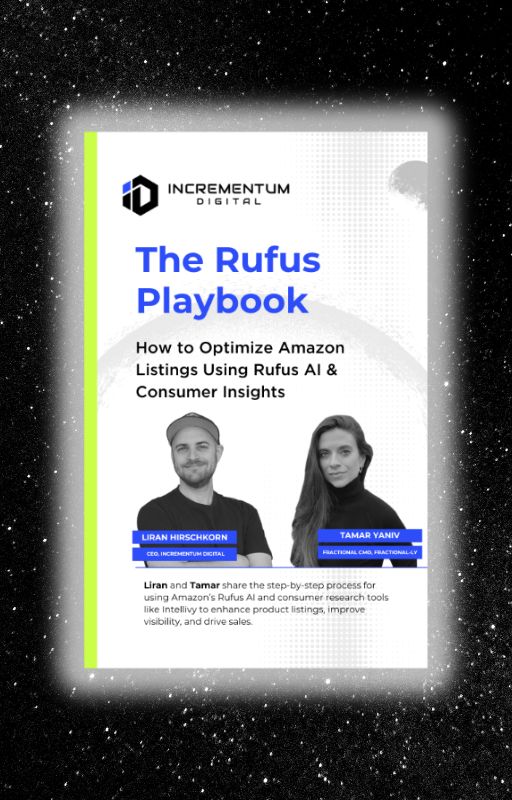
Learn How to Make Listings That Convert in 2025!
Read our step-by-step guide on how to optimize your listings using Rufus AI insights. Sign up for our newsletter and get your copy for free!
Show me howWith Prime Day moving to late June this year — weeks earlier than past years — brands are about to enter the most expensive advertising window of the first half. The question isn’t whether your ad costs will go up. It’s whether you’ll know the difference between “spending more because the opportunity is bigger” and “spending more because something is fundamentally wrong.”
Here are five signals we consistently see in underperforming accounts, and what each one might tell you about your own.
1. Your ACOS is rising but your revenue isn’t.
This is the most common red flag, and the most misunderstood.
ACOS benchmarks vary wildly by category, and Amazon now offers category-level benchmarking tools directly in Ad Console so you can see where your numbers land relative to your competitive set. A 35% ACOS might be excellent for a supplement brand with high margins and strong lifetime value. That same number could be devastating for a low-margin home goods product.
The issue isn’t the number itself; it’s the trajectory. If ACOS is climbing quarter over quarter while total revenue stays flat or declines, that’s a signal worth investigating. It could mean CPCs are rising faster than your conversion rate can absorb. It could mean competitors have improved their listings and are winning more of the clicks you’re paying for. Or it could mean your campaigns haven’t been re-optimized since the competitive landscape shifted.
Liran Hirschkorn, CEO of Incrementum Digital, has pointed out that many brands focus on ACOS in isolation when the more telling metric is TACOS — total advertising cost of sales — because it accounts for the relationship between your paid and organic performance. A rising ACOS with stable TACOS might mean your ads are driving organic sales effectively. A rising ACOS with rising TACOS means something more structural is off.
We break this down further in our guide to lowering TACOS and boosting profitability.
What to ask yourself: Is my ACOS rising because of increased competition, or because my campaigns haven’t been adapted? Do I know my ACOS in context — by category, by product margin, by TACOS?
2. You’re spending on keywords that don’t convert, and you might not know it.
This one is surprisingly common, even in well-managed accounts.
Amazon’s Search Query Performance report gives brands visibility into which search terms are driving impressions, clicks, and purchases. But many advertisers are still running campaigns where broad and auto keywords are harvesting traffic without a disciplined process for promoting winners and negating losers.
We’ve written about this extensively — our keyword harvesting guide walks through the mechanics. The short version: if you haven’t reviewed your search term reports in the last 30 days, there’s a good chance you’re paying for clicks on irrelevant or low-converting queries.
But here’s the nuance: what counts as a “wasted” keyword depends on your strategy. A brand running awareness campaigns ahead of Prime Day might intentionally bid on broader terms to build consideration — and that will naturally produce a lower immediate ROAS. The waste isn’t in broad targeting. It’s in broad targeting without intent.
What to ask yourself: When was the last time I reviewed my search term reports? Do I have a process for keyword harvesting — or are my campaigns running on autopilot?
3. You’re running one campaign type and expecting full-funnel results
Skai’s Prime Day 2025 analysis found that Sponsored Products generated 60% of Amazon Ads revenue on 76% of all clicks — making it the dominant format by volume. But the most efficient format during Prime Day 2025? Amazon DSP, which returned $11.18 ROAS — the highest among all ad types.
Meanwhile, Amazon’s own Prime Day strategy guide (published June 2025, updated March 2026) shows that advertisers using Sponsored Products, Sponsored Brands, and Display together saw a 139% increase in sales versus average category growth.
The pattern is clear: brands relying on a single ad format are leaving performance on the table. But the right mix looks different for every brand. A brand with a deep catalog and strong reviews might benefit from layering in DSP retargeting. A brand with a hero SKU and limited budget might be better off concentrating spend on Sponsored Products with tight keyword targeting.
Mansour Norouzi, Director of Advertising at Incrementum Digital, recently broke down how Amazon’s new Sponsored Brands Collections format integrates with Rufus AI, a development that adds a new layer to how brands think about upper-funnel paid visibility. The point isn’t that every brand needs to run every format. It’s that understanding what each format does — and where it fits in your customer’s journey — is what separates strategic spend from scattered spend.
What to ask yourself: Am I running one ad type because it’s the right fit for my goals — or because it’s the only one I’ve set up? Do I know which formats drive discovery vs. conversion for my category?
4. Your ad performance and your listing quality are being managed separately
This is a structural problem that shows up in the data as declining conversion rates on high-traffic keywords.
You can drive all the clicks in the world to a product page. If the listing doesn’t convert — weak images, generic bullets, thin A+ Content, low review count — those clicks are just expensive window shopping.
Amazon’s Prime Day advertising guide (published June 2024, updated March 2026) reports that Brand Store landing pages produce 28% higher sales attributed to advertising versus other landing page types. Listings with product video see up to a 23% sales increase. And with Rufus AI now influencing purchase decisions — 250 million shoppers have used it as of Q3 2025, with customers 60% more likely to complete a purchase when Rufus is involved — listing quality isn’t just a conversion factor. It’s an advertising input.
This is especially true heading into Prime Day, when competition for every impression is at its peak. A brand spending aggressively on ads while neglecting listing optimization is essentially paying premium prices to send shoppers to an underwhelming experience — and their competitors with stronger listings will convert those same shoppers instead.
We covered listing optimization strategy — including how AI-driven search is changing the game — in our guide featuring real strategies from Liran Hirschkorn, and our updated 2026 listing optimization guide.
What to ask yourself: If I look at my top-traffic ASINs — the ones getting the most ad-driven clicks — are those listings genuinely strong? Would I buy from them?
5. Your ad strategy hasn’t been re-evaluated in 90+ days
Amazon’s advertising ecosystem changes fast. In just the first quarter of 2026, we’ve seen Sponsored Brands Collections redesigned for AI-mediated placements, new self-service benchmarking tools from Amazon Ads (November 2025), a major DSP view attribution model overhaul (January 2026), and the Prime Day date shift to June (March 2026) — each of which changes how campaigns should be structured and budgeted.
Liran Hirschkorn shared his experience running Prime Day 2025 across Incrementum Digital’s client portfolio — where the extension to a four-day event revealed that Day 2 and Day 3 saw 20–40% sales declines from Day 1 across many accounts. That data point alone should reshape how brands allocate budget for 2026. But you’d only catch it if someone is actively analyzing performance and adjusting.
An ad strategy that was working six months ago may not account for:
- New competitors who’ve entered your keyword space
- Amazon’s format and placement changes
- Shifts in consumer behavior (like the drop in average order value to $53.34 during Prime Day 2025)
- Category-specific CPC inflation
This isn’t about chasing every update. It’s about whether your strategy reflects the marketplace as it is today — not as it was when you last set up your campaigns.
What to ask yourself: When was the last time my campaigns were holistically reviewed — not just bid adjustments, but structure, targeting, creative, and budget allocation?
What These Signals Add Up To
None of these signs, on their own, mean your advertising is broken. Context matters. Category matters. Brand stage matters. A brand launching its first product on Amazon has fundamentally different needs than a brand managing 200 SKUs with a seven-figure monthly ad budget.
But if you’re seeing two or three of these signals at the same time — and Prime Day is approaching — it’s worth pausing to evaluate whether your current approach will hold up under the pressure of the most competitive advertising window of the year.
Prime Day 2025 was Amazon’s largest ever, with $24.1 billion in US online spending across four days. Skai’s analysis showed CPCs during the event dropped 10.4% year-over-year — a sign of improving efficiency — but click-through rates jumped 74%, meaning more competition for attention even as cost per click moderated. Brands with messy ad foundations got buried. Brands with clean, intentional setups captured outsized returns.
The June 2026 timeline makes this more urgent. There are fewer weeks to identify problems, fix them, and let optimized campaigns build momentum before the event hits.
Where to Start
If any of this resonated, here are some resources to dig deeper:
- 3 Hidden Leaks in Most Amazon Ad Accounts (and How to Fix Them) — A closer look at the structural issues that silently drain ad budgets
- How to Strategize for Multi-Day Amazon Sales Events Like Prime Day — Campaign structure and budget thinking for multi-day events
- Amazon Prime Day 2025 Recap: Top Advertising Insights and Tactics — What the data from last year’s four-day event actually showed
- Profit vs. Scale: How to Choose Your Amazon Advertising Strategy for Major Sales Events — A framework for thinking about the tradeoff, not a one-size-fits-all answer
- How to Choose the Right Amazon Agency (Without Wasting 12 Months) — What to look for if you’re evaluating outside help ahead of Prime Day
And if you want someone to look at your specific situation, request a free Amazon audit. We’ll review your account and tell you what we see — no commitment, no generic report. Just an honest read on where you stand heading into Prime Day.




LET’S DISCOVER WHAT’S POSSIBLE FOR YOUR BRAND
We’re here to listen and uncover opportunities tailored to your unique goals.
Fill out the form to get started, and you’ll walk away with real insights and actionable recommendations—whether we work together or not.
- HANDS-ON LEADERSHIP
- AWARD-WINNING PARTNERSHIPS
- CUSTOM-BUILT SOLUTIONS