Amazon Product Listing Optimization
Amazon Listing Optimization: An Updated Guide for Brands in 2026

Amazon listing optimization is the process of improving every element of your product detail page (title, images, bullet points, A+ Content, backend keywords, and more) so that your product ranks higher in search results and converts more shoppers into buyers. In 2026, it also means optimizing for Amazon’s AI shopping assistant, Rufus, which now handles over 274 million daily queriesand has driven $10 billion in incremental sales. If you are a brand selling on Amazon and spending on advertising, your listing is where every dollar either converts or gets wasted. This guide covers both the foundational best practices and the AI-driven changes that are reshaping how Amazon surfaces products to shoppers.
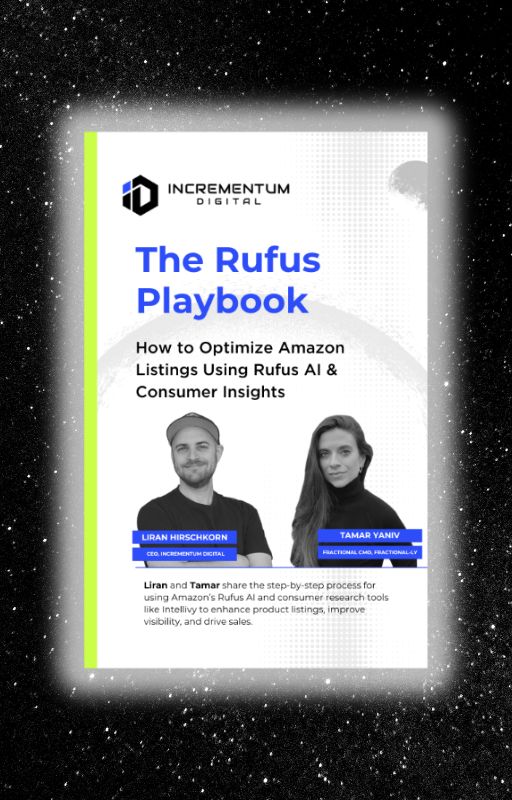
Learn How to Make Listings That Convert in 2025!
Read our step-by-step guide on how to optimize your listings using Rufus AI insights. Sign up for our newsletter and get your copy for free!
Show me howKey Takeaways
- Amazon product listing optimization now requires optimizing for three systems simultaneously: the A10 keyword algorithm, the COSMO semantic knowledge graph, and the Rufus AI conversational layer.
- Rufus users convert at a 60% higher rate than non-Rufus users — making AI-optimized listings a direct revenue driver.
- The fundamentals still matter: clear titles, high-quality images, keyword-rich bullet points, and strong reviews remain the foundation.
- AI search rewards content that answers questions, communicates value, and connects features to real-world use cases — not keyword-stuffed copy.
Why Amazon Listing Optimization Matters More Than Ever
Amazon has over 600 million products listed on its marketplace. Your product competes not only with direct competitors but with Amazon’s own private-label brands, international sellers, and an algorithm that decides who gets seen. At Incrementum Digital, we manage listings for 500+ brands, and listing optimization is consistently the highest-leverage activity we see. Here is why:
- Advertising costs are rising. Average CPCs across Sponsored Products have increased year over year. A well-optimized listing converts more clicks, which means lower ACOS and more profit from the same ad spend.
- Organic rank depends on conversion. Amazon’s algorithm rewards products that convert. A listing that turns browsers into buyers earns better organic placement, which compounds over time.
- AI is changing discovery. Over 250 million shoppers have now used Rufus, Amazon’s AI assistant. Rufus does not match keywords literally — it understands intent, reads reviews, scans images, and recommends products based on context.
- Brands that optimize only for the traditional keyword algorithm are leaving money on the table. Optimizing for all three discovery systems — A10, COSMO, and Rufus — is now table stakes.
The Three Systems Your Listing Must Satisfy
Understanding how to optimize an Amazon listing starts with understanding the three layers of Amazon’s search and discovery system.
1. A10 Algorithm (Keyword Matching)
This is the traditional Amazon search algorithm. It matches the keywords in a shopper’s search query to the keywords in your listing — title, bullet points, description, and backend search terms.
What it rewards:
- Keyword relevance and placement
- Sales velocity and conversion rate
- Click-through rate from search results
- Seller authority and account health
What to do: Include your highest-volume keywords in your title and bullet points. Use backend search terms for secondary and long-tail keywords. This foundation has not changed.
2. COSMO (Semantic Knowledge Graph)
COSMO is Amazon’s semantic knowledge graph, introduced to move beyond literal keyword matching. It understands the relationships between products, attributes, and customer intent.
When Amazon rolled COSMO out to 10% of U.S. search traffic, it drove a 0.7% increase in purchases and an 8% boost in shopper engagement.
What it rewards:
- Product attributes that match shopper intent (not just keywords)
- Content that connects features to real-world use cases
- Listings that resolve buyer uncertainty
What to do: Write listing copy that answers the “why,” not just the “what.” Instead of “Stainless Steel Garlic Press,” write “Garlic Press — Easy Squeeze, Dishwasher Safe, No Peeling Required.” Connect features to outcomes.
3. Rufus (AI Conversational Layer)
Rufus is Amazon’s generative AI shopping assistant. It reads your entire listing — title, bullets, description, A+ Content, images, reviews, and Q&A — and uses that information to answer shoppers’ natural-language questions.
The numbers speak for themselves:
- Shoppers who have used Rufus – 250 million
- Incremental sales (annualized) – $10 billion
- Conversion rate lift (Rufus users) – 60% higher
- Year-over-year interaction growth – 210%
- Monthly active user growth YoY – 149%
What it rewards:
- Natural language that matches how real shoppers ask questions
- Detailed product attributes (materials, dimensions, compatibility, use cases)
- Strong review sentiment and Q&A coverage
- Images with clear, readable text (Rufus uses OCR to scan images)
What to do: Write your listing as if you are answering a customer’s question in a conversation, not filling a keyword template.
How to Optimize Your Amazon Listing: Element by Element
Product Title
Your title is the single most important ranking factor. It is the first thing the A10 algorithm indexes, the first thing shoppers see in search results, and the first thing Rufus reads.
Best practices:
- Lead with the primary keyword. Place your highest-volume keyword within the first 80 characters (the mobile-visible portion).
- Include key product attributes. Size, quantity, color, material, and primary use case.
- Write for humans, not bots. Rufus and COSMO reward natural language. “Organic Green Tea — 100 Bags, Unsweetened, Japanese Sencha” reads better and performs better than keyword-stuffed alternatives.
- Stay under 200 characters. Amazon truncates titles beyond this limit on most categories.
-
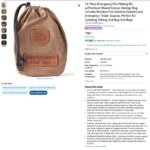
- We built a product title packed with high-intent keywords and structured the bullet points to answer the exact questions outdoor buyers ask — covering kit contents, weatherproof reliability, and veteran-owned credibility so both Rufus and shoppers get the full picture at a glance.
-
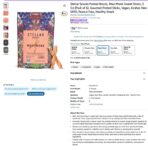
- We crafted a keyword-rich product title and benefit-driven bullet points that speak directly to the health-conscious snacker — highlighting vegan, non-GMO, and woman-owned credentials while weaving in search terms like “pretzel braids” and “healthy snack” that help Rufus surface the listing for the right queries.
Bullet Points
Bullet points are where you sell the product. They should answer the top five questions a buyer has before purchasing.
Best practices:
- One benefit per bullet. Lead with the outcome, follow with the feature.
- Address use cases. “Perfect for busy mornings” or “Designed for small kitchens” helps Rufus match your product to intent-based queries.
- Include specifics. Exact dimensions, weights, quantities, materials. Vague bullets do not convert and do not get surfaced by AI.
- Preempt objections. If competitors get negative reviews about durability, address it: “Built with double-reinforced stitching — designed to last 3x longer than standard alternatives.”
- Use natural language. Write like you are explaining the product to a friend, not packing in keywords.
Product Images
Images are no longer just for human shoppers. Rufus uses optical character recognition (OCR) to read text on your images — ingredients, certifications, claims, size charts, and comparison graphics.
Best practices:
- Main image: Clean, white background, product fills 85%+ of the frame. This drives click-through rate from search.
- Infographics (images 2–5): Feature callouts, dimensions, use-case scenarios. Use clear, standard fonts — Rufus cannot reliably read cursive or heavily stylized text.
- Lifestyle images: Show the product in context. A standing desk in a home office. aA protein powder being mixed at a gym. This helps Rufus understand use-case context.
- Comparison chart: A side-by-side graphic comparing your product to alternatives. Rufus reads these and uses them to answer comparison questions from shoppers.
- Size/quantity chart: Especially important for apparel, supplements, and consumables.
A+ Content (Enhanced Brand Content)
A+ Content is no longer optional for brands serious about Amazon product listing optimization. It directly impacts conversion rate and gives Rufus additional structured content to read.
Best practices:
- Use Premium A+ if available. It offers larger modules, video, and interactive elements. Brands report up to 20% higher conversion rates with Premium A+ compared to basic.
- Tell your brand story. Rufus reads brand story modules to understand who makes the product and why.
- Include comparison tables. Module types that compare your products against each other (not competitors) help Rufus answer “which one should I get?” questions.
- Add FAQ modules. These map directly to how shoppers ask Rufus questions.
- Do not repeat your bullet points verbatim. Use A+ to go deeper: manufacturing process, ingredient sourcing, certifications, founder story.
-

- A+ Content we created for TACAMO’s 15-Piece Emergency Fire Kit — featuring detailed product flat-lays, outdoor use-case panels, and component-level breakdowns of every item in the kit, giving shoppers (and Rufus) the depth that bullet points alone can’t deliver.
-

- Stellar Snacks: A+ Content we created for Stellar Snacks — built around real product photography, founder lifestyle imagery, and certification badges, with a comparison table that gives Rufus structured content to work with.
Backend Search Terms
Backend keywords are invisible to shoppers but indexed by Amazon’s algorithm. This is where you capture everything that did not fit naturally into your visible listing.
Best practices:
- Use all 249 bytes. Many sellers underutilize this field.
- Include synonyms, abbreviations, and alternate spellings. “Vitamin C” and “ascorbic acid.” “BBQ” and “barbecue.”
- Add common misspellings if relevant to your product.
- Do not repeat keywords already in your title or bullets — Amazon indexes them automatically.
- Include Spanish-language keywords if relevant to your category and customer base.
Customer Reviews and Q&A
Reviews are the most powerful conversion factor on Amazon — and they are also the primary content source Rufus uses to answer shopper questions.
Why this matters for AI-optimized listings:
- Rufus reads your reviews to understand real-world product performance. A product with thousands of reviews mentioning “great for sensitive skin” will get surfaced when a shopper asks Rufus “What’s a good moisturizer for sensitive skin?”
- The Q&A section is critical for health, beauty, and supplement categories. Rufus uses answered questions to respond to specific queries.
What to do:
- Use Amazon’s Vine program to generate initial reviews on new products.
- Monitor and respond to Q&A questions — unanswered questions are missed opportunities for Rufus to surface your product.
- Analyze negative reviews of competitors — address those pain points in your listing copy and images.
Amazon Listing Optimization for AI Search: The 2026 Playbook
The shift from keyword-based search to AI-driven discovery requires specific changes to how you approach listing optimization. Here is what to prioritize.
Think in Questions, Not Keywords
Traditional optimization: “waterproof hiking boots men size 10.”
AI-era optimization: “What are the best waterproof boots for hiking in rainy weather?”
Rufus and COSMO understand intent. Your listing needs to answer the questions shoppers are actually asking — not just match their search terms.
Action step: Go to your product listing on Amazon, scroll down, and look at the questions Rufus prompts shoppers to ask. Then make sure your listing content (bullets, A+, Q&A) directly answers those questions.
Communicate Value, Not Just Features
AI shopping assistants evaluate listings by how well they communicate overall value — not just features and price. According to research from Seller Labs, listings that justify price with durability, features, and long-term savings are more likely to be recommended by Rufus.
Example:
- Feature-only: “Made with 18/10 stainless steel”
- Value-driven: “Made with 18/10 stainless steel — resists rust and corrosion so you will not need to replace it. Designed to last 10+ years with daily use.”
Use Structured Product Attributes
Fill out every product attribute field Amazon offers for your category. Rufus and COSMO rely heavily on structured attribute data to match products to queries.
If a shopper asks Rufus “What’s the best compact coffee maker for small kitchens?” and your listing is missing the “size” and “recommended room type” attributes, Rufus may not surface your product — even if your title mentions “compact.”
Allow 7–14 Days for AI Changes to Take Effect
Unlike traditional A10 keyword changes, which can influence rankings within 24 hours, the COSMO knowledge graph updates more slowly. Industry analysis suggests allowing 7–14 days for listing changes to be fully reflected in how Rufus interprets and recommends your product.
Do not revert changes after three days because you did not see immediate results.
Common Amazon Listing Optimization Mistakes
1. Keyword Stuffing the Title
Cramming every keyword into your title hurts readability, reduces click-through rate, and does not help with Rufus or COSMO — which prioritize intent and context over keyword density.
2. Ignoring Mobile
Over 70% of Amazon shoppers browse on mobile. If your title gets cut off, your images are unreadable, or your A+ Content does not render well on a small screen, your listing is underperforming. Rufus is a mobile-first experience — if your listing fails on mobile, it fails in Rufus.
3. Copying Competitor Listings
AI systems reward differentiation. If your listing says the same thing as every competitor, Rufus has no reason to recommend you specifically. Find the unique angle — whether it is your manufacturing process, ingredient sourcing, warranty, or a specific use case you serve better than anyone.
4. Neglecting A+ Content
Brands that skip A+ Content are leaving conversion rate (and AI visibility) on the table. Rufus reads A+ modules. Premium A+ performs even better. If you have Brand Registry, there is no reason not to use it.
5. Set-It-and-Forget-It Mentality
Amazon listing optimization is not a one-time project. Consumer behavior shifts, competitors update their listings, Amazon changes its algorithms, and new Rufus features roll out regularly. Revisit your top listings quarterly at minimum.
Amazon Listing Optimization Checklist
Use this checklist every time you create or update a listing:
Title
- Primary keyword in the first 80 characters
- Key attributes included (size, quantity, material, use case)
- Reads naturally — not keyword-stuffed
- Under 200 characters
Bullet Points
- One benefit per bullet, outcome before feature
- Specific dimensions, weights, quantities
- Use cases and scenarios addressed
- Objections preempted
- Natural language, not keyword lists
Images
- Main image: white background, product fills 85%+
- Infographics with clear, readable fonts
- Lifestyle images showing real-world use
- Comparison chart or size chart included
- Text on images is legible (for Rufus OCR)
A+ Content
- Brand story module completed
- Comparison table included
- FAQ section with common questions
- Content goes deeper than bullet points
Backend
- All 249 bytes used
- Synonyms, abbreviations, and misspellings included
- No duplicate keywords from visible listing
- Spanish-language terms if applicable
Reviews & Q&A
- Vine program active for new products
- Q&A questions answered
- Negative competitor review themes addressed in listing
AI Optimization
- All product attribute fields completed
- Listing answers top Rufus-prompted questions
- Copy connects features to real-world outcomes
- Value is communicated, not just features and price
How Incrementum Digital Approaches Amazon Listing Optimization
At Incrementum Digital, we optimize listings for brands across Amazon, Walmart, and TikTok Shop. Our approach combines traditional keyword strategy with AI-era optimization:
- Data-driven keyword research using Amazon Brand Analytics, Search Query Performance, and advertising data to identify the terms that actually drive revenue — not just impressions.
- AI search auditing — we test how Rufus responds to queries in your category and identify the content gaps that prevent your product from being recommended.
- Conversion-focused creative — our creative team designs images and A+ Content that are built for both human shoppers and AI readability.
- Continuous optimization — we monitor ranking, conversion rate, and AI visibility on an ongoing basis, updating listings as the algorithm evolves.
If your brand is spending on Amazon advertising but has not updated its listing strategy for AI search, you are likely overpaying for every conversion. Learn more about how we can help.
Frequently Asked Questions
What is Amazon listing optimization?
Amazon listing optimization is the process of improving your product title, bullet points, images, A+ Content, backend keywords, reviews, and Q&A to increase your product’s visibility in Amazon search results and its conversion rate once shoppers land on your page.
How does Amazon Rufus affect listing optimization?
Rufus is Amazon’s AI shopping assistant that reads your entire listing — including images, reviews, and Q&A — to answer shoppers’ questions and make product recommendations. Listings optimized for natural language, specific product attributes, and value communication are more likely to be surfaced by Rufus. Rufus users convert at a 60% higher rate than non-users.
How often should I update my Amazon listings?
At minimum, review and update your top-performing listings quarterly. Update immediately when you see ranking drops, conversion rate declines, or when Amazon introduces new features (like new A+ Content modules or attribute fields). COSMO knowledge graph updates take 7–14 days to reflect, so plan accordingly.
Does A+ Content help with Amazon SEO?
A+ Content does not directly impact keyword ranking, but it significantly improves conversion rate — which is a key ranking factor in Amazon’s algorithm. Additionally, Rufus reads A+ Content modules, making it important for AI-driven product discovery.
What is the difference between Amazon SEO and Amazon listing optimization?
Amazon SEO focuses specifically on keyword strategy to improve search ranking. Amazon listing optimization is broader — it includes SEO but also covers images, A+ Content, pricing strategy, reviews, and now AI optimization. A complete listing optimization strategy addresses all of these elements together.
Incrementum also offers ads-only Amazon PPC management.




LET’S DISCOVER WHAT’S POSSIBLE FOR YOUR BRAND
We’re here to listen and uncover opportunities tailored to your unique goals.
Fill out the form to get started, and you’ll walk away with real insights and actionable recommendations—whether we work together or not.
- HANDS-ON LEADERSHIP
- AWARD-WINNING PARTNERSHIPS
- CUSTOM-BUILT SOLUTIONS