Amazon Advertising
Amazon Unboxed 2025: Leverage 10 New Features Using Real Consumer Insights for Q1 2026
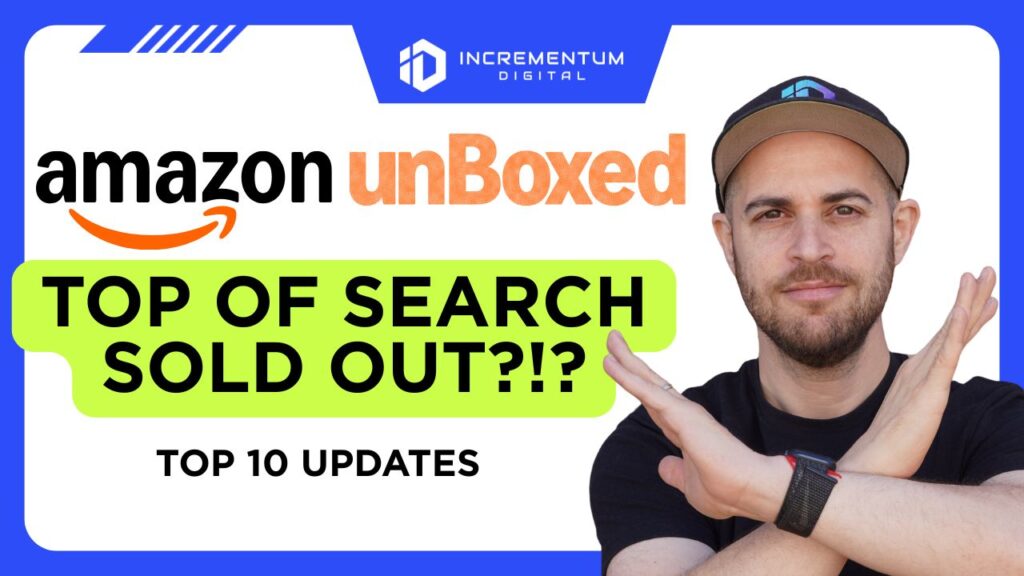
Amazon Unboxed 2025 unveiled a suite of AI-powered tools and ad tech upgrades. In our November video breakdown, Incrementum Digital CEO, Liran Hirschkorn, and Advertising Director, Mansour Norouzi, highlight Amazon’s latest advancements and what they mean for brands heading into 2026. This post connects those updates to real consumer behavior using real data to show how brands can align their strategy for maximum impact.
Learn How to Make Listings That Convert in 2025!
Read our step-by-step guide on how to optimize your listings using Rufus AI insights. Sign up for our newsletter and get your copy for free!
Show me how
1. Unified Ads Console
What it is: Amazon has merged DSP and Sponsored Ads into a unified dashboard. Instead of hopping between two separate ecosystems—with their own workflows, data models, and reporting formats—you can now manage, compare, and optimize all Amazon media in one place.
Mansour highlighted how impactful this is operationally: being able to view every ad type together fundamentally changes how teams navigate, analyze, and structure Amazon campaigns.
Why it matters tactically: This update removes one of the biggest sources of friction for large brand teams: the split between upper-funnel and lower-funnel environments.
With everything centralized, you get cleaner cross-channel visibility, faster diagnostic work, and the ability to use natural-language filtering (e.g., “Show me DSP campaigns with ROAS under 2.5”) to instantly surface insights that previously took multiple exports and manual matching. It also allows internal teams and agencies to operate from a single source of truth—reducing misalignment and speeding up decisions.
Consumer behavior fit:Consumers now move through Amazon in a way that doesn’t resemble a funnel—they bounce between video, search, ads, and PDPs without seeing any separation.
They expect the brand to recognize them across all of it, delivering a consistent and cohesive experience. But internally, most large organizations still operate in firm silos: DSP owned by media, Sponsored Ads owned by eCom, each with fragmented data and competing KPIs.
Amazon’s unified console closes this operational gap. It gives you a platform that mirrors how shoppers actually behave—fluid, multi-touch, and channel-agnostic. Instead of treating upper- and lower-funnel activity as separate worlds, you can finally connect influence, intent, and conversion within one environment.
More than just for convenience, this enables the integrated planning and measurement that modern consumers already expect from the brands they buy from.
2. AI-Powered Reporting & AMC Natural-Language Insights
What it is: Amazon is expanding reporting to include up to 15 months of daily data across Sponsored Products, Sponsored Brands, Sponsored Display, and DSP. You can customize reports by audience, device, placement, and more—all exportable for deeper modeling. AMC also supports natural-language SQL, allowing teams to generate complex analyses without manual query writing.
Why it matters tactically: Liran points out that this gives brands the long-term visibility they’ve been asking for.
Historically, Amazon’s short lookback windows and rigid reporting formats limited how far teams could analyze incrementality, seasonality, or halo effects. Now, teams can build reports tailored to their business questions—not just what the default dashboards allow. This makes it easier to align media, finance, and leadership around a unified performance narrative and gives analysts the depth they need to build stronger forecasting and budget models.
Consumer behavior fit: Shoppers aren’t making decisions in neat, trackable sessions anymore. Instead, they research products over days or weeks, bouncing between channels, formats, and devices. That creates a long, nonlinear journey that most brand teams have struggled to measure because their tools haven’t captured enough historical context to illustrate what actually influences conversion. Consumers expect brands to recognize them across these touchpoints, but most companies don’t have the integrated data required to do that consistently.
Amazon’s expanded reporting and natural-language AMC queries give you the visibility required to understand how shoppers actually move through Amazon. With longer timelines and more granular segmentation, you can connect the dots between discovery, evaluation, and purchase—across ads, PDP engagement, and retargeting.
This makes it far easier to pinpoint which touchpoints influence a sale, when to intervene, and how to sequence messaging across channels. In practical terms, Amazon is finally giving you the analytical depth to plan and optimize media around the real, multi-step paths consumers take today, not the simplified version most tools have forced you to work with.
3. Sponsored Brand Reserve (Fixed Top-of-Search)
What it is: Sponsored Brand Reserve allows brands to pre-purchase guaranteed top-of-search placements for their branded keywords at a fixed monthly cost. This removes the need to participate in auctions. You’re essentially reserving your own shelf space on Amazon the same way you’d lock in premium placement in retail.
Why it matters tactically: Mansour shared that when he compared Reserved pricing to what a brand was already spending on branded search, the numbers were nearly identical. In other words: you’re not paying a premium for stability. You’re securing guaranteed visibility without the unpredictability of bid wars, something especially valuable during Q4, tentpoles, or product launches where competitors often surge into your branded terms. For large brands with active categories, this is a cleaner, more predictable way to control your most important real estate.
Consumer behavior fit: Today’s shopper is both price-conscious and splurge-ready. Date shows they’ll trade down for everyday items but invest in the brands they trust for the products that matter. Branded search is where that investment shows up. When a consumer searches for your brand name, they’re already in a high-intent, “ready-to-buy” mindset. Losing that placement to a competitor doesn’t just cost you the click; it breaks the continuity of the buying journey.
McKinsey, Adobe, and Klaviyo all highlight that consumers expect consistency across touchpoints and rely heavily on familiar brands when deciding where to spend more. Sponsored Brand Reserve ensures your brand shows up predictably at the moment shoppers expect to see you, preserving trust and eliminating friction in a decision point where hesitation can push users to cheaper alternatives or competitor products. This isn’t just about owning your name; it’s about protecting the most valuable moment in the consumer journey for your highest-intent audience.
4. AI-Curated Sponsored Brand Collections
What it is: Amazon now automatically selects which products to feature in your Sponsored Brand placements based on the shopper’s search intent. Instead of manually picking ASINs, the system curates a mix of products that best match what a user is likely looking for at that moment.
Why it matters tactically: Mansour pointed out how Amazon’s examples showcased “different styles and technologies” for a single query like running shoes for men. This matters because Sponsored Brand ads have traditionally required brands to guess which three products to show. Now Amazon can adapt that selection dynamically, surfacing products that better reflect the shopper’s actual intent. This reduces manual upkeep, increases relevance, and improves the odds that the right product is put in front of the right shopper—especially in categories with broad assortments or fast-changing inventory.
Consumer behavior fit: Consumers don’t search generically anymore. Instead, they search contextually. Their queries signal preferences (style, benefit, use case, problem), and they expect the brand experience to adjust accordingly. But most large brands struggle to deliver this level of granular relevance because internal systems, assortments, and campaign structures aren’t built for real-time decisioning.
AI-curated collections solve that problem directly. They allow your brand’s assortment to adapt to the consumer instead of forcing the consumer to dig through irrelevant products. This aligns with the broader 2025 trend: shoppers want faster clarity with less effort.
When discovery feels customized, consumers stay in the journey longer; when it feels generic, they bounce or default to competitors. Amazon’s AI is essentially taking on the merchandising work digital teams don’t have the bandwidth or data infrastructure to do manually, ensuring that the browsing experience matches the intent behind every search.
5. Sponsored Prompts in Rufus
What it is: Brands can now activate sponsored prompts inside Rufus (Amazon’s AI shopping assistant) directly on product detail pages. These prompts are context-aware and tied to your catalog, and you can toggle them on or off depending on whether they make sense for the products being featured.
Why it matters tactically: This feature is intentionally built to preserve the integrity of Rufus. Because prompts are based on product relevance (not bid manipulation), they feel native to the customer journey rather than intrusive. They appear at high-value decision moments, offering additional information, comparisons, or recommendations right when shoppers are evaluating options.
For brands, this means you can shape mid-funnel consideration without interrupting the flow or “hijacking” the experience the way traditional ads sometimes do.
Consumer behavior fit: Shoppers increasingly turn to AI-driven assistance for product research, precisely because they’re overwhelmed by choice and skeptical of traditional ad formats. They want clear, credible guidance that reduces the cognitive load of comparing features, benefits, and use cases. But most brands don’t have the tooling to deliver this level of intuitive, context-specific support on their own PDPs.
Rufus prompts step into that gap by acting as an AI-powered layer of clarity. They help shoppers make sense of your category, your assortment, and your differentiators at the exact moment they’re deciding whether to move forward or look elsewhere. This aligns with the broader 2025 insight: consumers reward brands that remove friction, answer questions proactively, and make evaluation effortless. Rufus creates that experience automatically, transforming your PDPs from static content into interactive, guided decision journeys that match how today’s shoppers want to discover and validate products.
6. Multi-Clip Sponsored Product Videos
What it is: Multi-Clip Sponsored Product Videos allow brands to upload up to three short video assets within a single ad unit—each focused on a different feature, use case, or product angle. Instead of forcing shoppers to interpret static images or a single piece of creative, Amazon now lets you deliver a sequence of visual explanations in one placement.
Why it matters tactically: Showing different “features or scenarios” back-to-back helps shoppers understand the product faster, especially on mobile, where attention is short and comparisons happen rapidly. This matters for brands with multi-benefit SKUs or products that require demonstration. You can now anchor your message in multiple value props at once without fragmenting campaigns or relying on long-form video that most shoppers won’t finish.
In categories where differentiation is visual—beauty, home, fitness, consumer electronics—this format gives you more surface area to articulate what makes your product better.
Consumer behavior fit: Shoppers increasingly rely on quick, visual cues to make decisions. They want clarity immediately, not after scrolling through five bullets or digging through a carousel. Video has become the default discovery and evaluation format—especially for Gen Z and mobile-first consumers—because it compresses information into seconds instead of minutes. But most PDP experiences still rely on static assets that don’t match how people actually assess products today.
Multi-clip video solves for this shift. It mirrors the content style consumers already engage with on TikTok, Reels, and YouTube Shorts—fast, visual, multi-angle storytelling. It reduces friction in the evaluation process by addressing multiple questions at once:
- What does it do?
- How does it work?
- What makes it different?
- Is it worth it?
The more angles you can cover quickly, the more confident a shopper feels—and the less likely they are to bounce or comparison-shop. This update aligns Amazon’s ad experience with the way consumers naturally consume product information today: rapid, visual, and context-rich.
7. Streaming TV Hub + Live Sports Inventory
What it is: Amazon now allows brands to plan, buy, and manage streaming TV campaigns directly inside the ads console, including access to premium live sports inventory. Instead of negotiating through fragmented third-party workflows, you can handle everything inside a single Amazon environment, with clearer overlap between streaming reach and retail media performance.
Why it matters tactically: Sports remain one of the last formats consumers consistently watch live. That distinction matters. Live sports capture real-time, undistracted attention, something almost no other channel delivers in 2025’s fragmented media landscape.
For brands, showing up in these moments means higher recall, stronger emotional impact, and better top-of-funnel momentum. Bringing sports and streaming into the same planning hub as Amazon’s commerce-driven ad products gives you a more cohesive way to connect awareness with purchase behavior without the disconnect that usually exists between upper-funnel and retail media teams.
Consumer behavior fit: Consumers are shifting away from traditional TV, but they haven’t abandoned high-attention moments; they’ve simply migrated them to streaming platforms. Live sports, tentpole events, and appointment-style viewing still command strong engagement because they offer something today’s digital environment rarely does: collective attention. At the same time, shoppers increasingly expect frictionless movement from discovery to purchase, and they make buying decisions faster when inspiration and transaction live closer together.
Amazon’s integration of streaming TV and sports inventory directly into the ad console aligns with this shift. It lets brands bridge high-impact awareness with immediate shopping pathways in the same ecosystem. Instead of treating brand storytelling and commerce activation as separate efforts, you can orchestrate both within a single retail media environment—reflecting the way consumers naturally move from inspiration → exploration → purchase.
Overall, this update gives you access to moments where attention is still concentrated, and the tools to connect that attention directly to conversion.
8. Creative Agent (AI-Powered Creative Builder)
What it is: Creative Agent is Amazon’s generative AI tool that automatically produces product videos, display assets, and imagery using your ASIN data. You provide the product; the system generates multiple creative variations that can be deployed across Amazon’s ad formats.
Why it matters tactically: The outputs are already “very good,” which is significant because creative has historically been one of the biggest bottlenecks for brands on Amazon. Photo shoots, video production, and iterative asset development are slow—and expensive. Creative Agent shortens that cycle dramatically. It lets teams test concepts, refresh messaging, and scale into new formats without waiting on production timelines or external agencies. For brands managing dozens or hundreds of SKUs, the ability to generate high-quality assets in minutes instead of weeks fundamentally changes how quickly you can adapt to market conditions and creative fatigue.
Consumer behavior fit: Consumers are consuming more visual content than ever, and they expect brands to keep up with the pace and style of what they see on TikTok, Reels, and YouTube Shorts. They gravitate toward fast, clear, visually-led explanations—not polished, overly formal creative. At the same time, they expect brands to deliver relevance: the right message, in the right format, tuned to what they care about.
Most organizations aren’t built to produce content at that speed. That’s the gap Creative Agent fills. It gives brands the ability to generate fresh, contextually aligned creative at the pace consumers actually engage with it. Instead of rolling out a single asset and hoping it performs, you can continuously refresh visuals, tailor messaging to different audiences or categories, and maintain consistency across the shopper journey. Creative Agent aligns Amazon’s ad ecosystem with the modern consumer’s consumption habits—rapid, visual, personalized—and removes the operational drag that keeps brands from meeting those expectations.
9. Enhanced Brand Store Attribution
What it is: Amazon now provides a more granular breakdown of Brand Store traffic sources, including A+ Content, Google autocomplete, social referrals, direct visits, and other discovery pathways. Instead of lumping most traffic into broad “organic” buckets, you can see precisely which upstream touchpoints are driving shoppers into your storefront.
Why it matters tactically: This update gives brands clarity they’ve never had before. You can finally distinguish which investments (A+ upgrades, social content, creator partnerships, search optimizations, off-Amazon media) are actually moving customers into your brand ecosystem on Amazon.
For large organizations managing multiple acquisition channels, this level of attribution helps teams reallocate spend more intelligently, strengthen cross-functional alignment, and build a credible narrative around what’s working and what’s not. It also helps identify underperforming content or channels that need attention.
Consumer behavior fit: Today’s shoppers don’t follow a straight line from awareness to purchase. Instead, they pick up cues from multiple touchpoints before landing on Amazon to validate or buy. They might see a TikTok video, read an article, browse your site, or tap through an email before finally entering Amazon to make their decision. But most brands have lacked visibility into how these “off-Amazon” influences actually contribute to Amazon conversion.
Enhanced attribution reflects how consumers really behave. It surfaces the hidden pathways shoppers take and highlights the upstream content that builds trust and drives them into your brand experience. This is critical in 2025, when trust, authenticity, and relevance matter more than ever. With better attribution, you can understand which signals resonate, which channels spark interest, and which pieces of content move shoppers from curiosity to purchase, allowing you to shape the journey with far more intention.
For consumers who expect consistent experiences across every touchpoint, this is the analytical foundation brands need to deliver it.
10. AI Ads Agent for DSP
What it is: The AI Ads Agent is Amazon’s new DSP assistant that builds campaigns automatically from your media plan, manages bulk optimizations, and accepts natural-language commands for adjusting bids, budgets, and audiences. It turns tasks that used to require deep platform expertise into simple prompts like “increase budget on high-viewability audiences” or “add retargeting to this line item.”
Why it matters tactically: DSP has always required specialized operators—people who understand supply, audiences, bid strategies, pacing, and attribution nuances.
The AI agent can take a media plan and “create the campaigns for you,” which fundamentally changes the speed of execution. Instead of long setup cycles, manual trafficking, and back-and-forth revisions, the system can produce full campaigns end-to-end. This reduces operational strain on internal teams and agencies, minimizes human error, and accelerates time-to-launch.
Consumer behavior fit: Consumers don’t wait. Their expectations shift fast, and their behavior changes even faster. They move between discovery, consideration, and purchase in compressed windows, making relevance a moving target. Most brands can’t adjust DSP strategy quickly enough to match these shifts because setup is slow, optimizations are manual, and teams are bandwidth-constrained.
The AI Ads Agent brings campaign agility up to the speed of consumer behavior. It allows you to adapt messaging, update audiences, fine-tune budgets, and build new programs as quickly as shopper intent evolves. When people discover products through short-form video or social recommendations and immediately jump to Amazon to evaluate, timing matters. If your media can’t flex to those moments, you miss the window. The AI agent strengthens your ability to stay aligned with real-time consumer signals. This helps your DSP execution be more responsive, more precise, and closer to how people actually shop today.
Want to Know Where Your Biggest Amazon Opportunities Are? Start Here.
Amazon just changed how the entire ads ecosystem works: unified data, AI-driven activation, new formats, new measurement. Most brands won’t adjust quickly enough, not because they lack budget, but because they lack visibility.
If you want a clear picture of where your brand stands in this new environment, you can start by submitting an audit request. It takes about a minute, and then our team does the heavy lifting.
What we deliver in the audit:
- Market Intel: Where your category is moving and where your brand can realistically take share.
- Competitor Breakdown: Who’s gaining, who’s losing, and how your performance compares.
- Campaign Deep Dive: What’s efficient, what’s wasting spend, and what needs to be rebuilt.
- Content & Creative Review: How your assets are helping (or hurting) conversion.
- Custom Growth Moves: Specific, actionable recommendations based on your brand’s trajectory.
- Zero-Fluff Reporting: A clear, concise deck you can take directly into internal strategy meetings.
If you’re ready for that level of insight, request your audit here. It only takes about a minute.



LET’S DISCOVER WHAT’S POSSIBLE FOR YOUR BRAND
We’re here to listen and uncover opportunities tailored to your unique goals.
Fill out the form to get started, and you’ll walk away with real insights and actionable recommendations—whether we work together or not.
- HANDS-ON LEADERSHIP
- AWARD-WINNING PARTNERSHIPS
- CUSTOM-BUILT SOLUTIONS